
BULLET: TOO CLOSE
There are some wildlife encounters where the photograph is only half of the story.
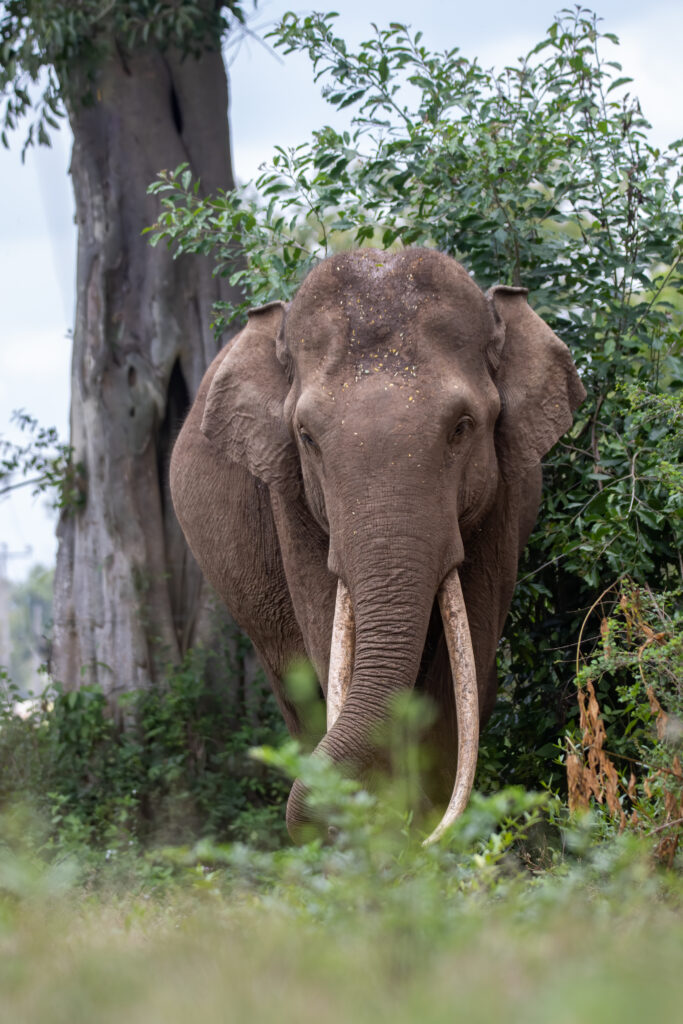
Along the Udawalawe–Thanamalwila Road, I came across a magnificent tusker known as Bullet, also called Senadhi. I had seen him before, but every encounter with a tusker of this size feels different. There is something incredibly powerful about watching a wild elephant standing just a few metres away, surrounded by the familiar landscape of the road, forest and electric fence.
Bullet is a particularly well-known elephant in this area because of his unusual tolerance of people. He regularly moves along the electric fence beside the road, while tourists stop their vehicles to watch and photograph him.
Unfortunately, this tolerance has also created another problem.
Bullet has become accustomed to being fed by people. Tourists often offer him fruits and other food from the roadside, and some fruit and food sellers actively encourage tourists to feed him. Over time, this has made Bullet associate people and vehicles with an easy source of food.
For a wildlife photographer, however, this unusual behaviour created an opportunity that would normally be impossible.
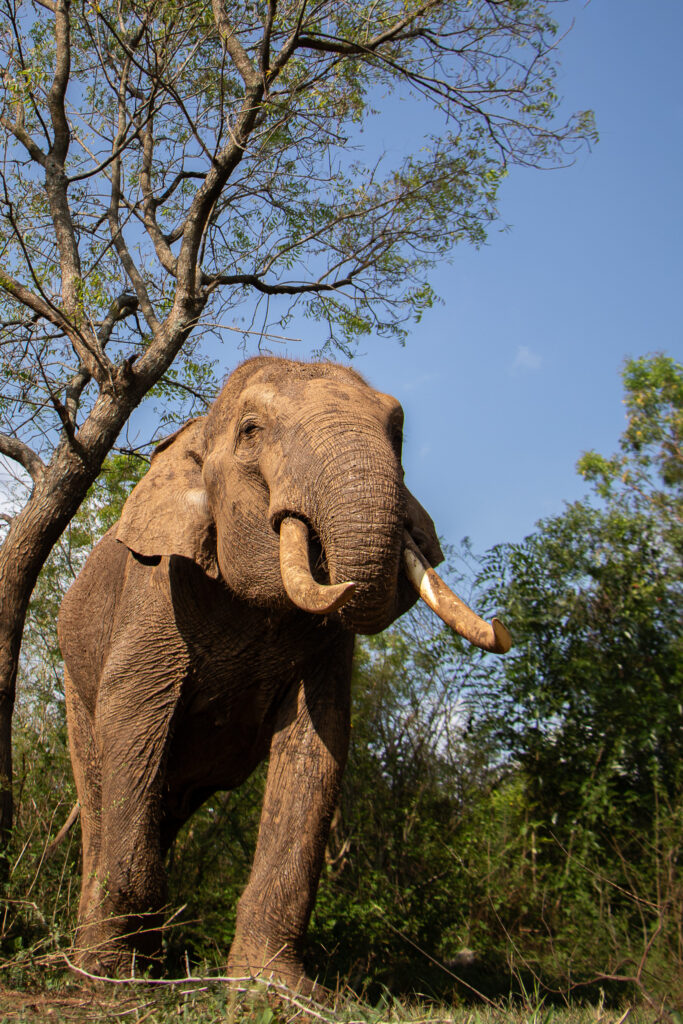
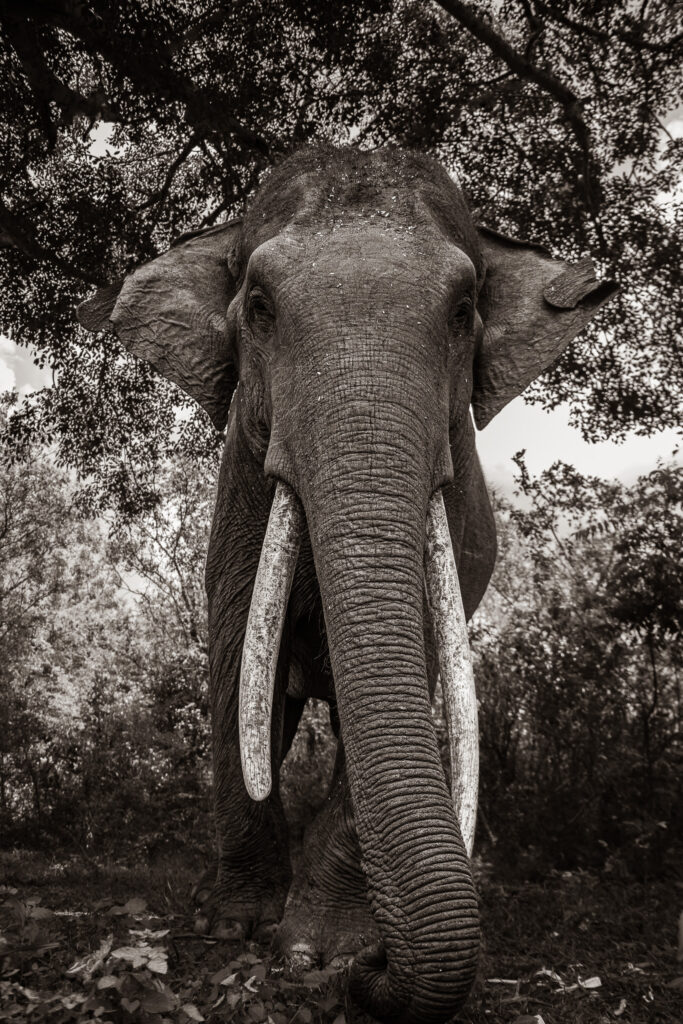
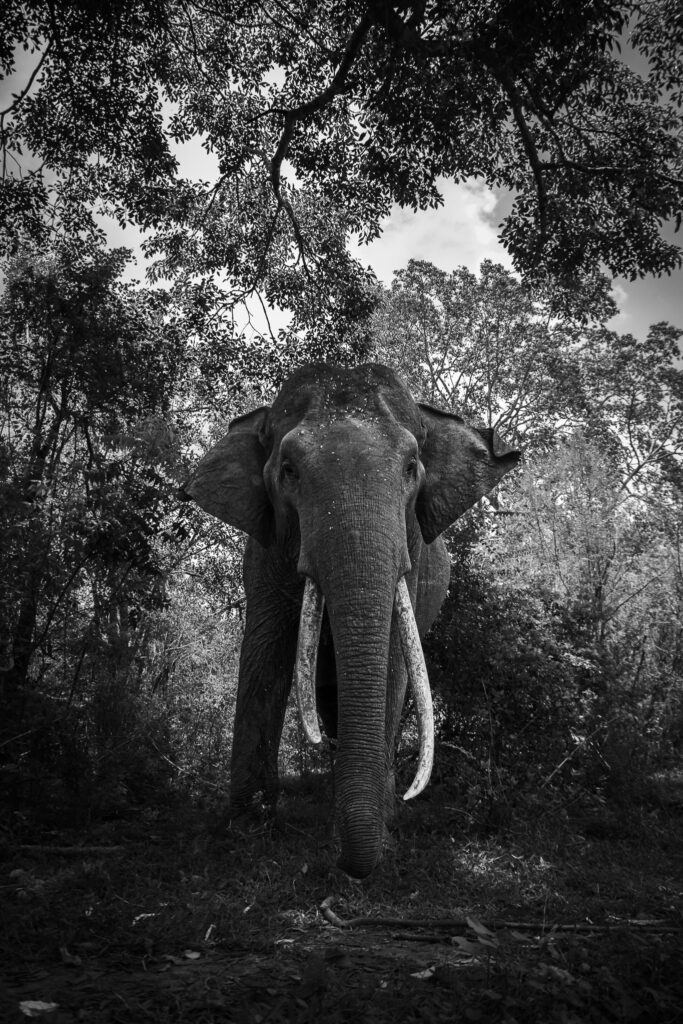
I wanted to photograph Bullet from a perspective that would make the encounter feel much more intimate and dramatic. Instead of photographing him from the usual eye level or from inside a vehicle, I wanted the camera to be almost at ground level, looking upwards at the enormous tusker.
The electric fence made this particularly challenging.
With Bullet on the other side, I carefully positioned my camera underneath the fence and used a wide-angle lens, shooting handheld from an extremely low angle. This allowed me to place the elephant’s massive head and body against the sky while still including the surrounding environment.
The result was a completely different perspective.
From that position, Bullet looked enormous. His tusks, trunk and face dominated the frame, while the low viewpoint exaggerated his already impressive size. It was one of those photographic opportunities that simply would not have been possible with a normal telephoto setup or from the usual distance.
And yet, while I was excited about the photographs, there was something about the encounter that stayed on my mind.
Bullet has become too comfortable around humans.
His calmness might look harmless, and from a tourist’s perspective it can even seem like a wonderful opportunity to get close to a wild elephant. But for the elephant, this kind of habituation can have serious consequences.
Wild elephants naturally spend a huge amount of time moving through their habitat and searching for food. Their diet consists of a wide variety of grasses, leaves, branches, bark and other vegetation. Feeding themselves naturally is a major part of their daily behaviour.
Bullet, however, has access to an easier alternative.
Instead of always having to search for food, he knows that people along the road may provide him with something sweet. The fruits and other foods offered by tourists can be highly appealing to him, but the problem is the quantity, frequency and unnatural feeding pattern.
A large amount of sweet food means a lot of sugar, while repeatedly relying on food from people can reduce the need for natural foraging. It is not a balanced replacement for the varied vegetation an elephant would naturally consume.
And the problem goes beyond nutrition.
When a wild elephant becomes comfortable approaching people and vehicles, the distance between wildlife and humans gradually disappears. An elephant that no longer sees people as something to avoid can become increasingly dependent on roadside food. This can eventually create dangerous situations for both the elephant and the people around it.
What looks like a calm, friendly elephant is still a wild elephant.
That is why I don’t want these photographs to be interpreted as an invitation to get closer to Bullet or feed him. In fact, they are a reminder of why we should do the opposite.
Please don’t feed wild elephants.
Don’t call them towards vehicles. Don’t encourage them to approach roads. Don’t try to touch them or get closer for a better photograph. And don’t support businesses that deliberately attract them with food.
As wildlife photographers and wildlife lovers, our responsibility should not simply be to capture beautiful images. It should also be to make sure that our presence does not change the behaviour of the animals we photograph.
I feel fortunate that Bullet’s unusual behaviour gave me the opportunity to create these low-angle images. But I would much rather see him keeping his natural distance from people, spending his days foraging naturally, and remaining the wild elephant he is meant to be.
These photographs are therefore more than just images of a magnificent tusker. They are a record of an unusual encounter — and a reminder that sometimes, being able to get unusually close to wildlife is not necessarily a good thing.
Keep your distance. Keep them wild.