
A RARE BOND
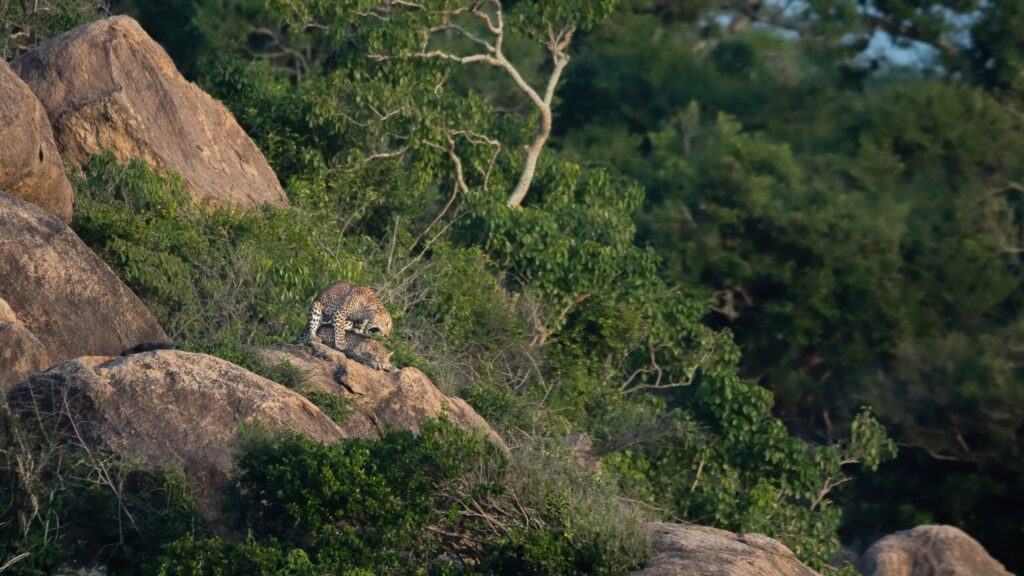
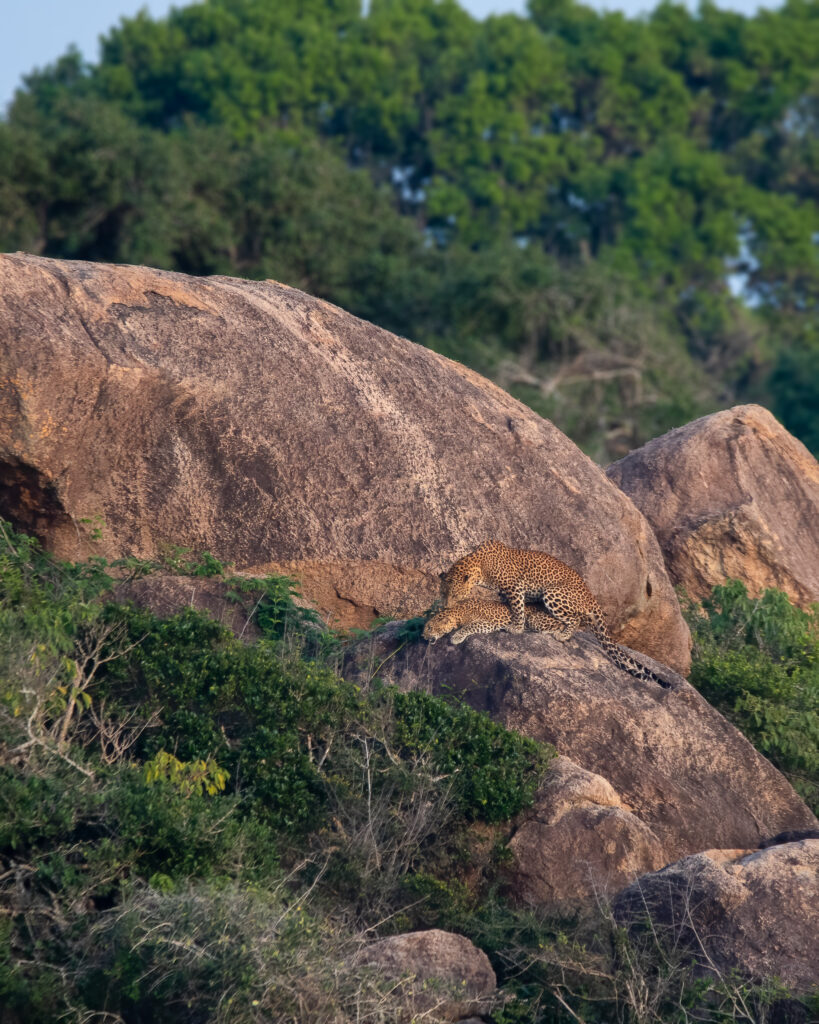
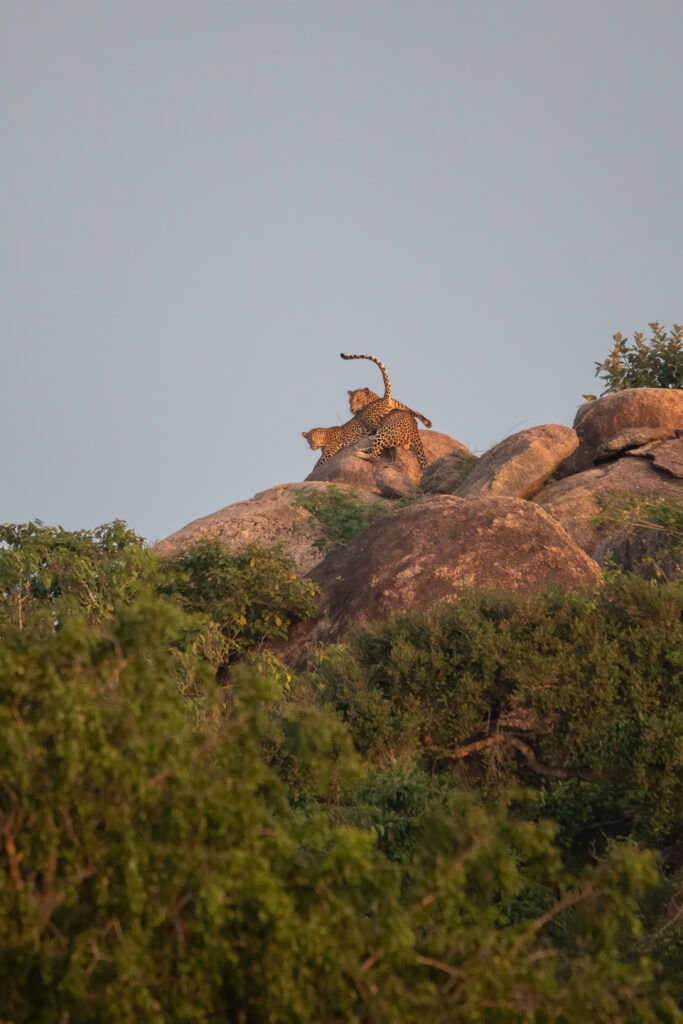
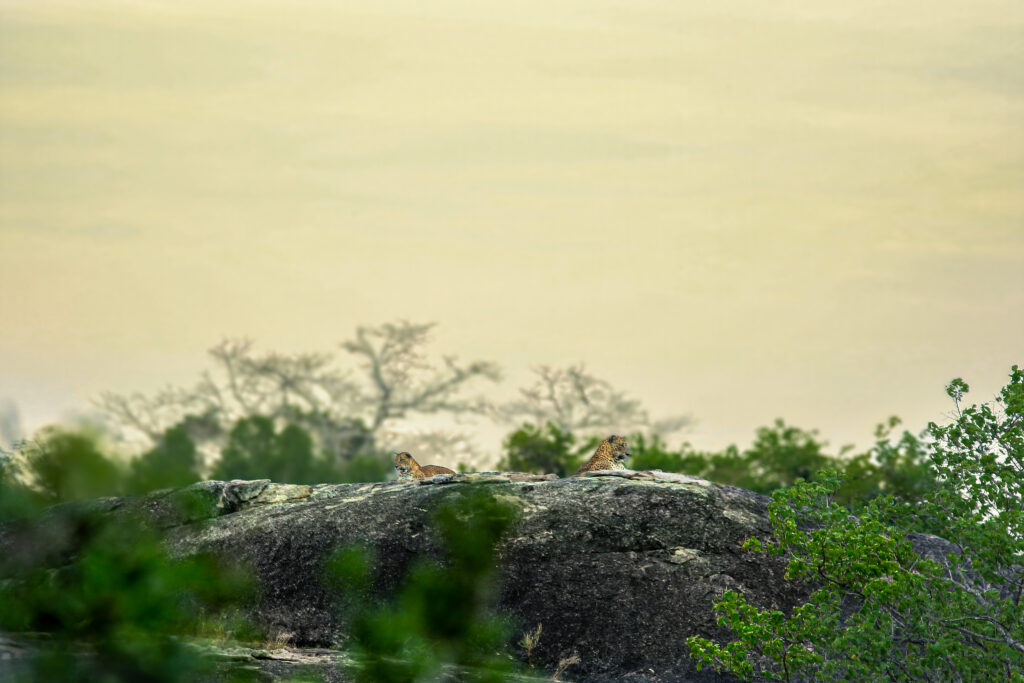
For an animal that spends most of its life alone, seeing two Sri Lankan leopards together is always special.
Seeing them mating is something else entirely.
The Sri Lankan leopard (Panthera pardus kotiya) is generally a solitary animal. Males and females maintain separate territories and normally come together only for particular purposes, with mating being one of the most important.
When a female enters oestrus, however, that solitary life temporarily changes.
For several days, a male and female may remain together, travelling, resting, feeding and repeatedly mating. What may appear to be a single mating encounter from a safari vehicle can actually be part of a much longer period of courtship and copulation.
The beginning
The female plays an important role in initiating the process.
As she enters oestrus, changes in her behaviour and scent can attract males. She may become more vocal, scent-mark more frequently and actively approach a potential mate. During courtship, she may walk in front of the male, brush against him, move her tail and repeatedly encourage his attention.
Eventually, the male mounts her.
One of the most distinctive behaviours during leopard mating is the male’s grip around the female’s neck. He may hold or bite the nape of her neck while mating, accompanied by growling and other vocalisations.
It can look surprisingly aggressive.
But this behaviour is a normal part of leopard reproduction.
Research on leopards has documented males biting the female’s nape during mating, while both animals can growl during copulation.
For anyone fortunate enough to witness it in the wild, it can be a remarkable scene.
Two animals that normally live independently suddenly become intensely focused on one another.
Seconds at a time
One of the most surprising things about leopard mating is how short each individual copulation is.
A detailed study of large felids recorded an average intromission duration of approximately 3 seconds in leopards.
That might sound almost impossibly brief.
But the important part is that mating is repeated many times.
After one copulation, the pair separates for a short period before coming together again. Research has recorded intervals of only several minutes between successive copulations. In one long-term study of wild leopards in South Africa, mating pairs averaged around four copulations per hour, with an average of approximately 256 copulations during a consortship.
So a leopard mating sequence is not one event.
It is a repeated process.
A pair may mate again and again throughout the day and night, resting and moving between bouts.
This repeated mating is important because leopards are induced ovulators: repeated copulation stimulates ovulation, increasing the likelihood that fertilisation will occur. Research on another leopard subspecies found that only a proportion of mating periods resulted in ovulation, highlighting why repeated mating is biologically important.
Days together
The relationship does not normally end after a single mating.
Leopard pairs can remain together for several days during the female’s receptive period. Studies of wild leopards have recorded consortships lasting from roughly one day to a week, with averages around two to three days in some populations.
During this time, the pair may travel together, rest together and feed in the same area.
Then, once the female is no longer receptive, their temporary relationship comes to an end.
They return to their solitary lives.
The male continues with his territory.
The female eventually becomes responsible for everything that follows.
Waiting for new life
Leopard pregnancy is relatively short compared with the enormous amount of development that must take place before a cub can survive independently.
Gestation is generally around 90–100 days, with approximately 96–97 days commonly reported for leopards.
After roughly three months, the female gives birth, usually in a secluded location such as dense vegetation, a rocky shelter or another protected den.
The mother raises the cubs alone.
A typical litter consists of around two or three cubs, although litter size can vary.
At birth, the cubs are extremely vulnerable.
Their eyes remain closed for several days, and they depend entirely on their mother for warmth, protection and nourishment.
The mother must leave them hidden while she hunts, returning with food and regularly moving them between den sites as they grow.
The mating pair that we may have watched so intensely for a few days will therefore never become a family unit in the way humans understand one.
The male moves on.
The female carries the responsibility forward.
From mating to motherhood
This is what makes a leopard mating sighting so fascinating.
When we watch two adults mating in the forest, we are witnessing only the beginning of a much longer story.
Within approximately three months, the female may be hiding a litter of tiny cubs somewhere in the wilderness.
Those cubs will eventually begin exploring their surroundings.
They will play.
They will follow their mother.
They will learn to stalk.
They will practise hunting.
And eventually, they will leave her territory and begin lives of their own.
The entire process—from courtship to mating, pregnancy, birth and raising cubs—is one of the most remarkable cycles in the life of a Sri Lankan leopard.
A moment rarely seen
Most visitors to Yala, Wilpattu or any of Sri Lanka’s other leopard habitats hope simply to see a leopard.
Perhaps walking along the road.
Perhaps resting on a rock.
Perhaps climbing a tree.
Perhaps carrying a kill.
But occasionally, the forest offers something much rarer.
Two leopards together.
The growling.
The courtship.
The repeated mating.
The brief moments of separation before they come together again.
For a photographer, these encounters can produce extraordinary photographs and videos.
But beyond the images is something more important.
It is a glimpse into a part of leopard life that most people will never witness.
For a few days, two solitary predators put aside their solitary lives.
Then they separate.
And somewhere around three months later, hidden deep within the forest, a new generation may arrive.
The encounter that we witnessed may have lasted only a few days.
But its consequences can last for years.