
RUKWILA CUBS
Even before entering Yala National Park, we had already heard whispers about three leopard cubs somewhere around Rukwila. They were still more rumour than fact. People had heard about them, but nobody we knew had actually managed to see them. For wildlife enthusiasts, that was enough to make the possibility exciting. If the rumours were true, perhaps we could be among the first to witness them.
We settled into the Kosgasmankada campsite, deep inside Yala National Park. Staying at one of these campsites is very different from the camping experience you might find in many other countries. There is no electricity, no running water and no proper washroom facilities. The campsites are wonderfully wild and basic, often situated close to a river where water can be collected for washing and other necessities, although of course it is not suitable for drinking.
There is also no comfortable boundary between you and the wildlife.
At night, the forest belongs to the animals. Elephants, snakes, scorpions, leopards and even sloth bears can move through the surrounding wilderness. Staying there means understanding that you are a visitor in their home, and your own safety is largely your responsibility.
Our first evening safari gave us a taste of what Yala had in store. We had two leopard sightings, including a particularly memorable encounter with Lucas, a well-known male leopard. It was already a rewarding start to the trip.
But the following morning, our attention was fixed on something else.
The Rukwila cubs.
We left the campsite at around 6:00 in the morning. It was still dark, and the forest had that special atmosphere that exists only in the early hours before sunrise. The roads were quiet, the temperature was cool, and there was a sense that anything could appear from the darkness.
We headed towards the Rukwila area and began looking carefully through the surroundings. We knew that finding the cubs would be far from guaranteed. They were young, vulnerable and naturally hidden away by their mother. After spending some time searching, we eventually began to leave the area.
Then our guide suddenly said,
“Look, there is a jackal drinking water.”
We turned our attention towards the animal.
But it wasn’t a jackal.
It was a leopard.
And not just any leopard.
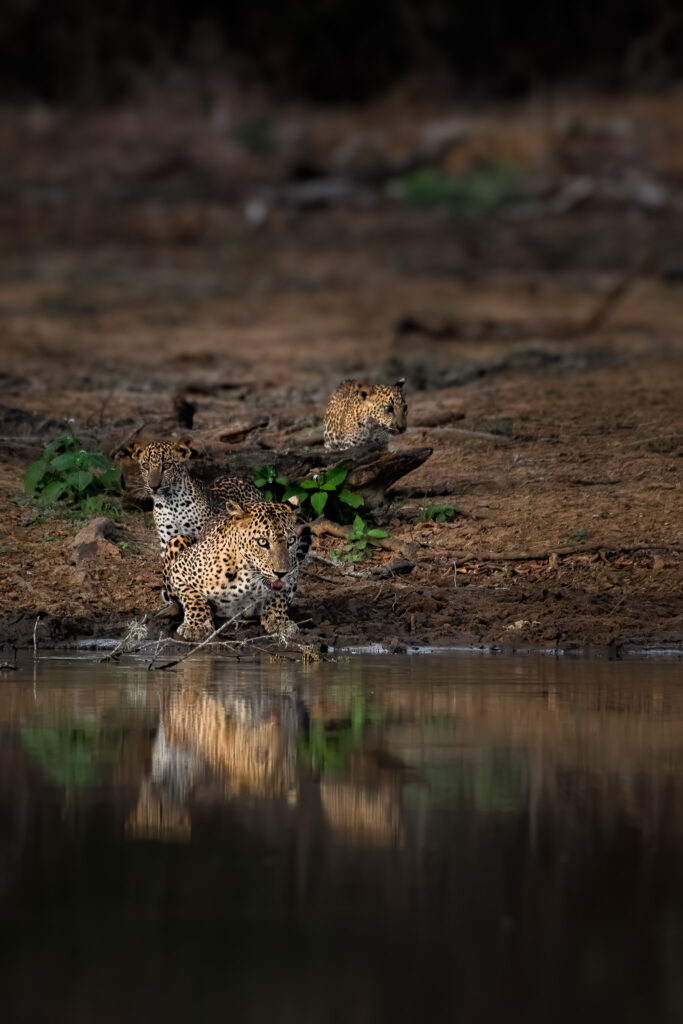
It was Hope, the mother of the Rukwila cubs.
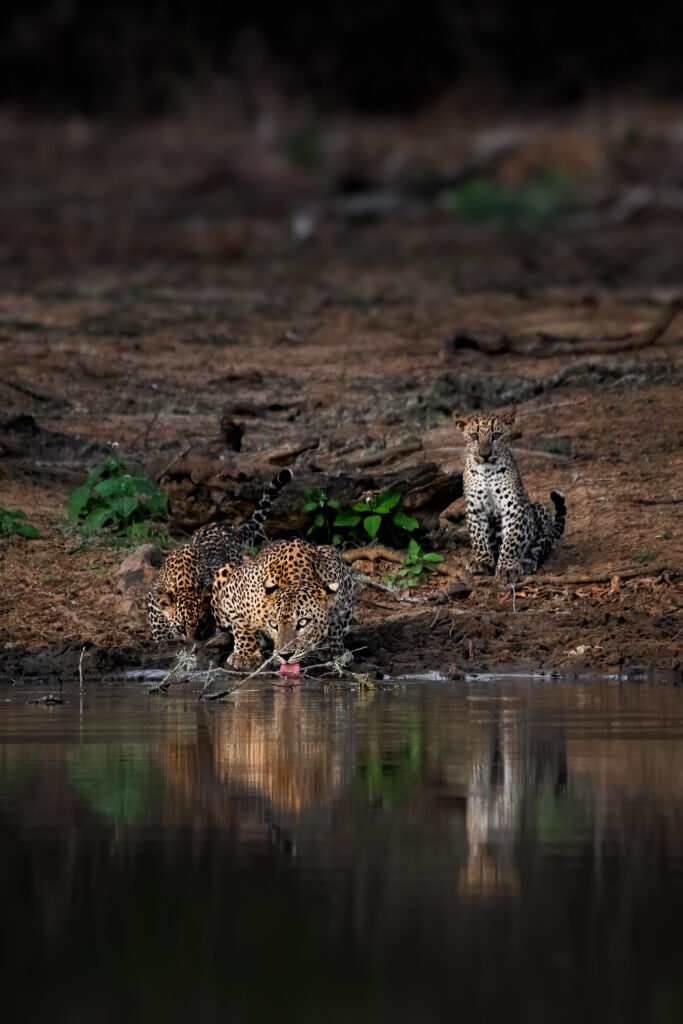
For a moment, the search for the cubs seemed to have already become worthwhile. We watched Hope carefully as she drank from the water. Then, after some time, something began moving through the bushes behind her.
At first, it was difficult to understand what we were seeing.
Then they appeared.
Two tiny leopard cubs.
They were the Rukwila cubs.
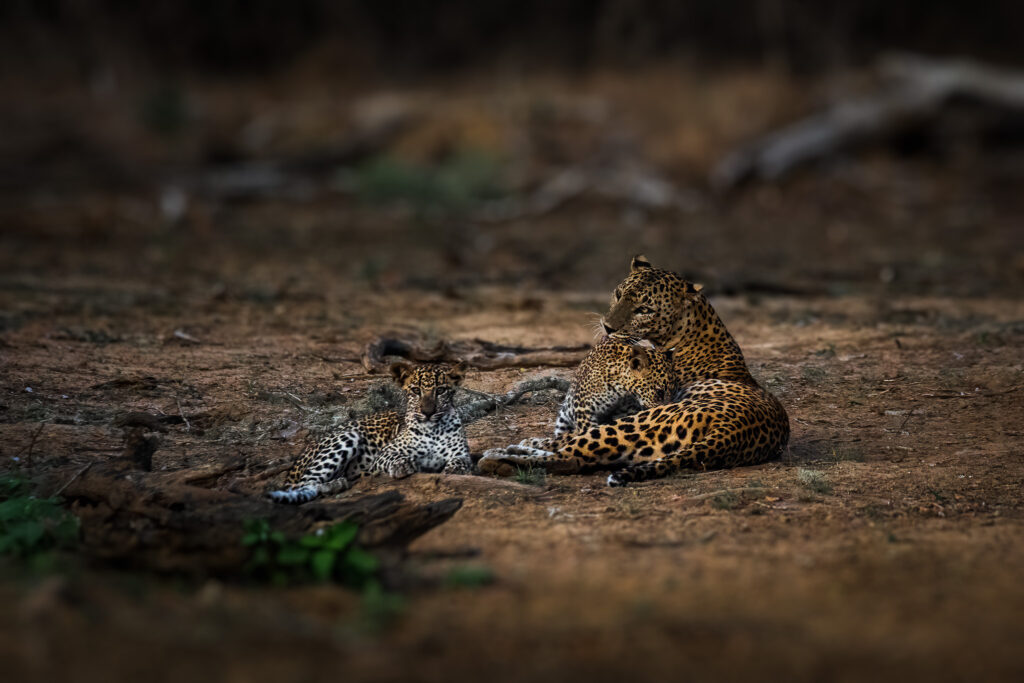
The two young males slowly made their way towards their mother. Once they reached her, the scene became something completely different. The cubs played around their mother, drank water alongside her and moved around with the carefree energy that only young animals seem to possess.
Then came one of the most intimate moments of the sighting.
Hope allowed one of the cubs to nurse.
Watching a wild leopard mother quietly feeding her young in the middle of Yala was something I will never forget. There was no dramatic chase, no roaring or confrontation, just a mother and her cubs sharing a completely natural moment in the wilderness.
Eventually, Hope moved back into the bushes, and the cubs disappeared with her.
The entire encounter had lasted only a short time, but it felt almost unreal.
We later learned that there were actually three cubs in total — two males and one female. Knowing that made the sighting even more special. What we had witnessed was not simply a leopard encounter; we had briefly been allowed into the early life of a leopard family.
Unfortunately, none of the three cubs survived to adulthood.
That is one of the difficult truths of photographing and observing wildlife. A beautiful sighting does not necessarily have a happy ending. Young leopards face countless dangers as they grow, and the wilderness can be unforgiving. Seeing those cubs playing beside their mother that morning was therefore not only magical, but also fleeting.
At the time, we did not know that the little family we were watching would eventually disappear.
We simply stood there and watched.
Two tiny male leopards playing beside their mother. A third cub hidden somewhere nearby. Hope patiently caring for them. The morning light slowly taking over from the darkness.
For a few minutes, everything felt perfectly still.
And that is what remains with me most strongly from that morning — not just the photographs, but the feeling of being there.
We had entered Yala with nothing more than a rumour.
We left Rukwila having witnessed something very few people had been lucky enough to see.
The Rukwila cubs.